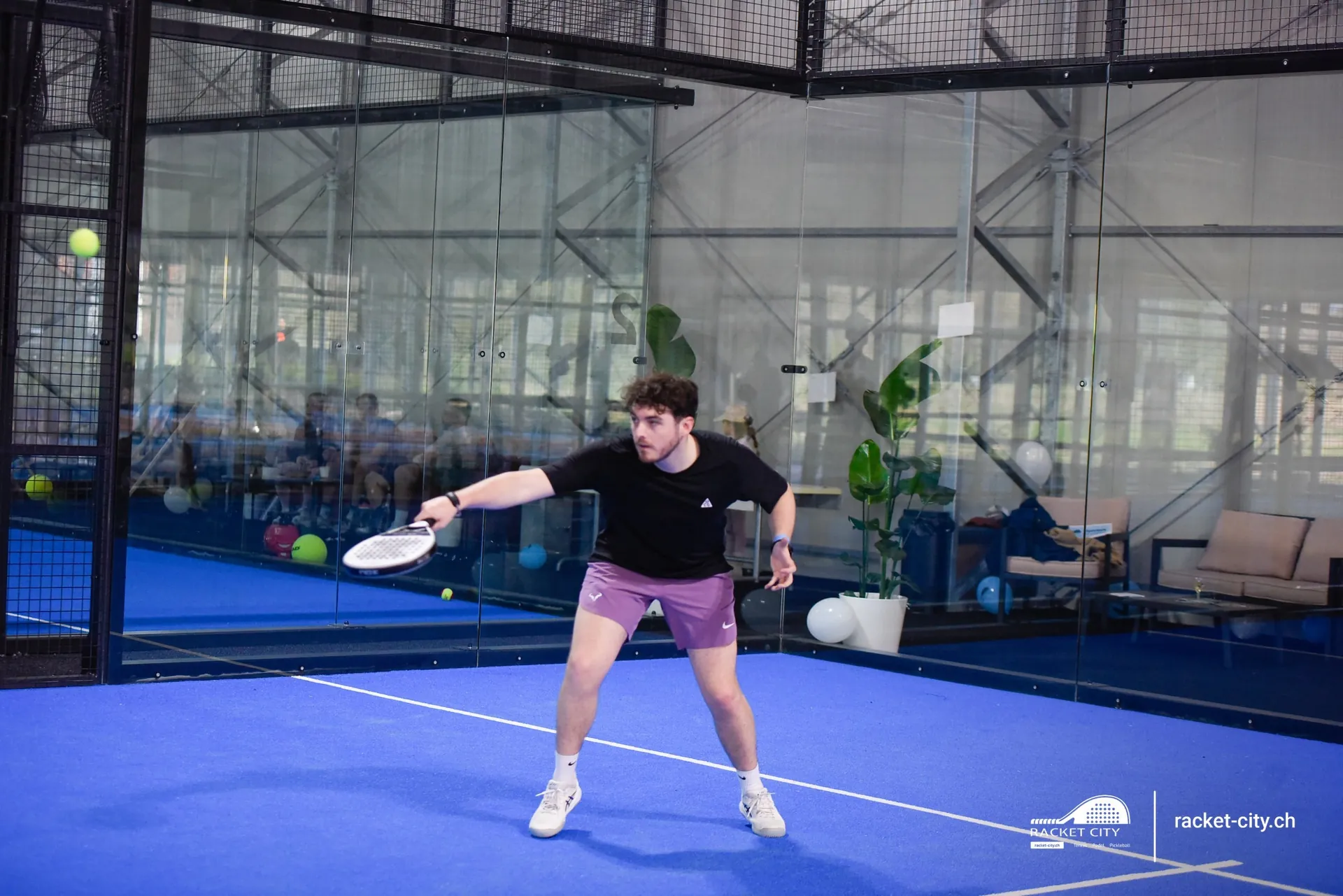
Padel is quick to learn: know the five key rules and you'll be playing real rallies within minutes. Here's how padel works — and the easiest way to get started near Solothurn.
What is padel?
Padel is a racket sport from Mexico and Spain that combines elements of tennis and squash. It is almost always played as doubles, four players, on a court enclosed by glass walls and mesh. The walls are part of the game: after bouncing on the floor, the ball may come off them and stay in play.
That is what makes padel so accessible. Rallies are longer than in tennis, the technique is learned faster and mixed-level groups have fun together. It's the fastest-growing racket sport in Switzerland.
The court and equipment
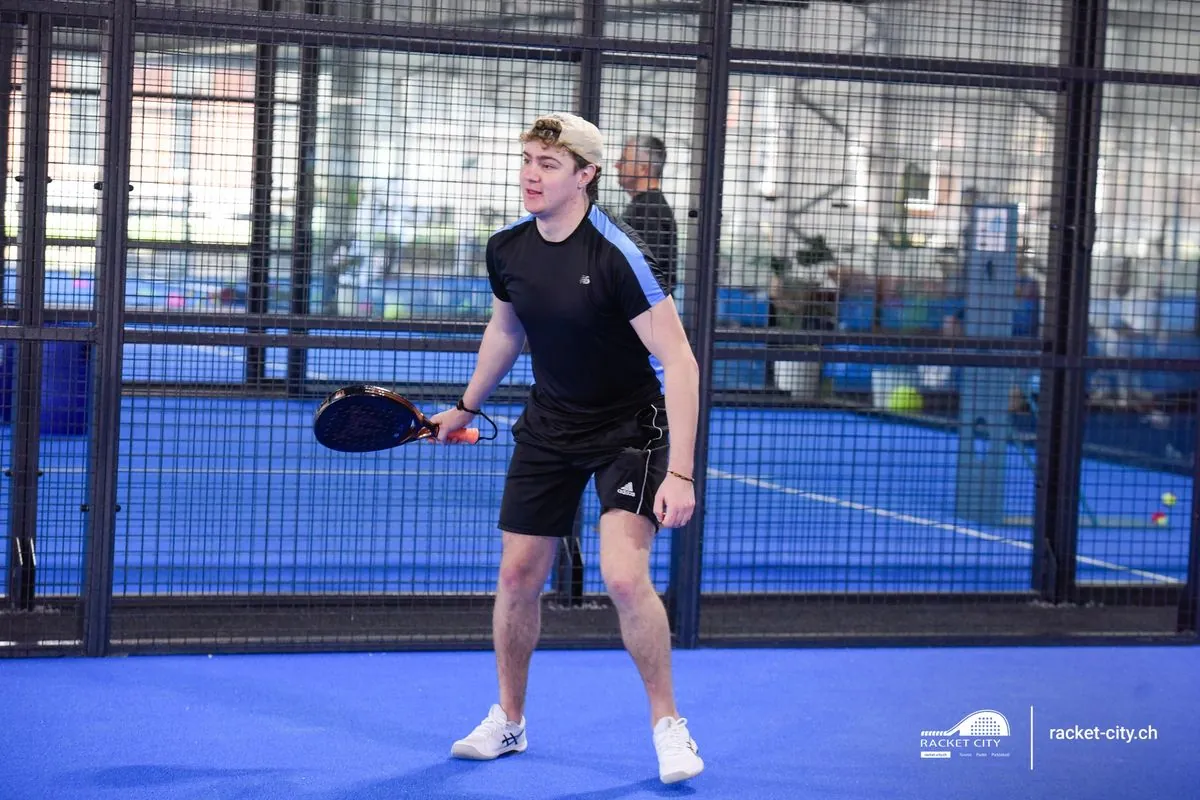
A padel court is 20 metres long and 10 metres wide — much smaller than a tennis court. The net is 88 cm high in the centre. Glass walls and mesh enclose the back and sides.
You play with a stringless padel racket: a compact, perforated face made of foam and carbon or fibreglass. The ball looks like a tennis ball with slightly lower pressure. At Racket City you play on Super Panoramic courts — glass all round, no posts in your line of sight.
- Court: 20 × 10 m, fully enclosed
- Net: 88 cm in the centre
- Racket: stringless, perforated
- Ball: like tennis, slightly lower pressure
The serve
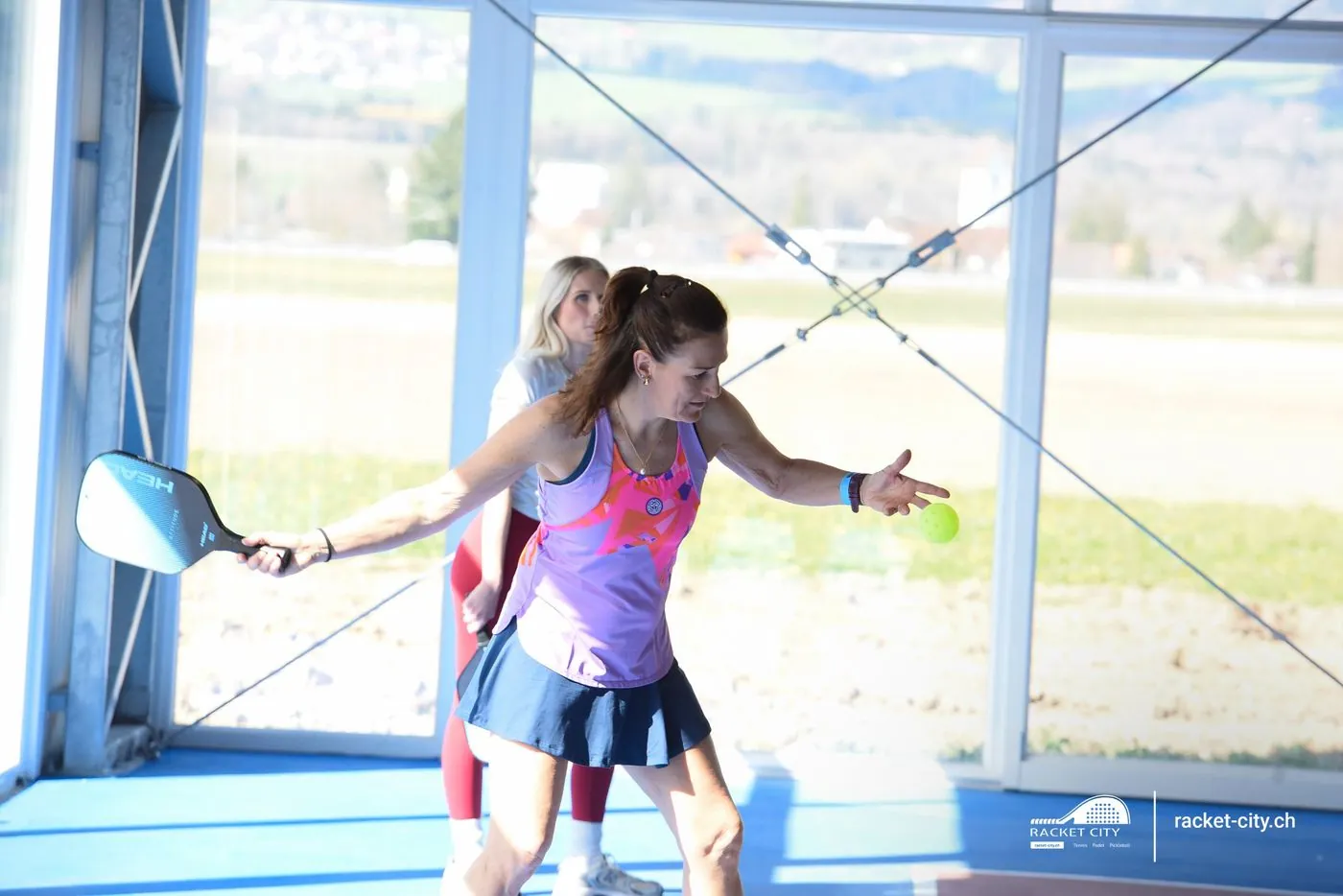
The serve is underarm. Bounce the ball once behind the service line and hit it at or below waist height, diagonally into the opposite service box.
The ball must land in the service box. It may then touch the side or back glass, but not the mesh. As in tennis, you get two attempts.
The key rules
The principle is simple: the ball must hit the floor on the opponents' side before touching a wall. The opponents can then return it on the volley, after the bounce or after it comes off the wall.
You may also play the ball against your own glass — one of padel's most spectacular shots. Volleys are allowed; only the return of serve must bounce first.
- Ball must hit the opponents' floor first
- Walls can be used after the bounce
- Only one bounce per shot
- Return of serve always after the bounce
- Ball hitting the opponents' wall or mesh directly is out
How scoring works
Scoring is the same as tennis: 15, 30, 40, game. Six games win a set, with a tie-break at 6–6. Matches are usually best of three sets.
Many tournaments and social games use the golden point: at 40–40, a single point decides the game.
Learning padel in Solothurn
The quickest way to learn is to play. Book a court with three friends, rent rackets from the machine in our padel hall for CHF 5 and have someone explain the walls at the start. After an hour you'll be playing real rallies.
For a more structured start, the Racket City Academy offers private and group coaching. You'll find partners at your level in our WhatsApp groups.
- Book via Playtomic
- Rental racket: CHF 5
- Beginner courses at the Academy
- Beginner WhatsApp group